
I have seen the same fact pattern at least 20 times: Fast-growing Company B recruits an established Chief Compliance Officer from Company A. The pitch: We need you to help us build out real compliance. Yes, that means walking away from your guaranteed high salary, bonus compensation, and job security. But, in exchange, we will offer you massive equity upside. If you help us take Company B to the next level, your equity will be worth multiples of whatever you left behind.
The CCO takes the bait and makes the jump. In our typical scenario, Company B wants to go public at some point in the next few years. Compliance a major weakness. So, Company B reaches upward in the market to poach an established CCO from a publicly-traded company. This same exact thing happens with Chief Financial Officers. But for our example, we will stick with a CCO.
The CCO onboards and at first, everything is all sunshine and bullshit. Standard corporate marketing: This is going to be a great fit. We’re headed to the top. We’re so glad to have you onboard.
But then, the new Chief Compliance Officer actually starts doing what she was hired to do: Build compliance. First, she discerns the problems. A litany of regulatory violations, both foreign and domestic. Company B is doing the same shit that regulators in the EU just popped a competitor for to the tune of $40 million. Tax problems. There are almost always tax problems. Some inflated expenses or deductions — something like that. Consumer-side issues with false or deceptive advertising. And a culture where line-level employees who raise compliance concerns are quickly fired on false pretenses.
Having identified a litany of compliance concerns, the new CCO sets about building a comprehensive compliance framework. But her efforts immediately encounter resistance. From the CEO.
Enter the CEO. Megalomanic. Typically male. Typically ages 40 to 62. Up until that point in time, the CEO has made all the decisions. Nobody has ever challenged his judgment. He has ruled like a king. The CEO routinely violates laws and regulations. He views these things as optional. They constrain him too much. They slow him down. They limit the speed of his growth. His goal is simple: Go public and get through the lock-up period. 180 days. Then none of this shit matters. He’s sitting on $150 million or more. Everyone else can go fuck themselves. And the new CCO is getting in his way.
So, naturally, the CEO does what we would expect: He fires the CCO. He fires her the day before she is supposed to complete a major report on critical compliance lapses. He does this in concert with the head of HR, who is notoriously the most willing, unprincipled, and unsophisticated of all the corporate baddies. And he says it’s because the CCO was a bad fit. They do not run this through legal. The General Counsel has no clue that it’s happening.
Our CCO has just been fired for flagging clear legal and regulatory lapses. The facts support a very strong whistleblower retaliation claim. But our CCO does what that type of person always does: Attempt diplomacy.
The Initial Approach: Why Diplomacy Always Fails
Let’s step back and consider the landscape. Our CCO has just been fired in retaliation for flagging obvious legal and regulatory violations. It’s a textbook whistleblower retaliation claim. She has massive economic losses. She walked away from a secure position at Company A. She gave up a higher salary, guaranteed bonus structure, and long-term incentives to join Company B and build compliance in exchange for equity upside. Then she got fired for doing the job. She is out at least $600,000 in base salary and bonus compensation. But, more significantly, she is out $4 million to $8 million in equity. Most of her equity hasn’t vested yet. Or, worse, all of it is forfeit because Company B says the termination was “for cause”.
Company B (stupidly) offers our CCO a separation package that can only be described as an insult: $65,000. X weeks of salary. Dog shit.
In spite of this landscape (which I would call holding all the cards), our CCO does what people like her always do: Be reasonable. Attempt diplomacy.
There’s a real psychological reason for this. People who become CCOs (or CFOs) of big companies tend to be (a) diplomatic, (b) rule followers, and (c) establishment types. They assume good faith. They believe in the system. They believe in a certain order, reasonableness, fairness. They assume that these things matter to everyone else, too. But they don’t.
So, our CCO asks for something reasonable. Let’s call it $600,000. I’m going to stop the narrative here and just start running bullet points. Because you get the picture. Now, let’s get surgical.
The $600k ask. I use $600k but that’s just a rough number. $600k is one of the most common numbers that I see. The typical ask is $400,000 to $800,000. Most of you do the same thing. You ask for 1-year of salary plus a small kicker. You never ask for all that you are entitled to. You never ask for your real, make-whole damages. And you never leverage the massive exposure that Company B has if they decide to fuck around and find out. So Company B basically laughs at you and offers you peanuts. You never get the $600k you asked for. How do I know this? Because this is when people call me and when I get involved. So I have seen this 20+ times.
You probably can’t leverage it yourself. Use the right tool for the job. You are a big company CCO, CFO, and sometimes COO. You are the right tool for that job. You are not the right tool for this job. Maximizing the value of these claims requires (a) subject matter expertise in the relevant law; (b) a history of ugly, high-stakes, bet-the-farm litigation; (c) a credible threat to burn it all down; (d) southpaw / anti-establishment / unconventional leanings; (e) experience in these exact same situations; and (f) extraordinarily good judgment.
We resolve 99.5% of these cases pre-suit. But we still litigate a bunch of very ugly, high-stakes, bet everything cases. On both sides. We represent plaintiffs in a variety of high-stakes employment cases. But we defend lots of executives and employees in massive non-compete and trade secret cases where there is $25 million+ at issue. More on that later. It is always readily apparent when the BIGLAW lawyers on the other side are spooked. Out of their depth. And not really prepared for this level of ugliness and catastrophe. (Think Inception. “We’re not prepared for this kind of violence!”). It’s like you can smell their fear.
That’s a highly pertinent digression. The point: Even most BIGLAW lawyers who say that they do this are not prepared to do this. So you don’t represent yourself. You pick the right tool for the job. You hire a lawyer who checks off all the boxes laid out above. Even if you have attempted the diplomatic strategy and it failed miserably, you remain well-positioned as long as you get the right tool, effectively reframe the situation, and reorient the Company to a much higher price-point.
Reframe the Situation: The Existential Threat and Risk Containment
This is a note on leverage and psychology. If you show up by yourself, acting like a reasonable person, and very diplomatically ask for a reasonable $600k, you are setting yourself up for failure. Consider how you have framed the situation: It’s like you are asking the company for a favor.
Please, if you wouldn’t mind very much, pay me about a year of salary. I’m not saying that’s my best and final offer. I’ll negotiate. Just give me something close to $600k and I’ll take it and be grateful and go away. I’m so sorry to bother you.
So these are the people who have just fucked you out of $7+ million, derailed your career, defrauded you, maybe even defamed you. And you have a royal flush. You hold all the cards. You have claims that a sophisticated operator can turn into catastrophic exposure for Company B and maximum settlement value for you. You are in a no-blink posture. But you don’t play it that way because you are the CCO. Establishment player. Diplomat. Wrong tool for the job.
You have to work the case up to its maximal value. The equity piece is almost always your biggest bucket of economic damages. We roll it all in. Lost income. Bonus compensation. Lost equity. Often times there is an initial implied share value based on the stock grant at the time of hire. We work from there, account for the company’s growth curve over time, and update the share value accordingly. Then we run various economic models to predict post-IPO value. We use the company’s own public statements and publicly available data to build that model. We simulate a range of share-price outcomes to avoid false precision. This gives us our baseline economic damages number. In these cases, that number is typically anywhere from $3 million to $12 million.
If the whistleblower walked away from significant money at her previous company, we carve that out into a separate, additional model that we can use for a separate fraud claim. But table that for now because that gets too deep into the weeds of legal strategy and election of remedies.
The upshot: We have our baseline economic damages. Call it $6 million. Now we can really cook. We have our own in-house analytics model that we feed with case law, jury verdicts, known settlements, all of our own cases going back 14 years. We approximate a value for non-economic compensatory damages based on similar cases. These are damages for career disruption, emotional distress, humiliation, depression, stress, having to relocate their family, etc. Let’s use a round-number placeholder of $1 million (which is not uncommon in C-level whistleblower cases). This yields our all-in compensatory damages number of $7 million.
That brings us to the main event: Punitive damages. When a big company (public or private) fires a C-level whistleblower who raised concerns about legal and regulatory violations, that is textbook punitive damages territory. Most of the whistleblowers in these cases have signed a jury trial waiver. Once in a blue moon, we get one that hasn’t. If the case would ultimately go to a jury trial, the punitive exposure is potentially catastrophic. But even in arbitration or a bench trial, the punitive damages still have real teeth. Absent a jury trial, punitive damages effectively are capped at a much lower number (e.g. $5 to $10 million). No arbitrator is going to tag a big company for more than $10 million in punitive damages. But a jury? Absolutely.
So depending on the landscape (jury trial, bench trial, arbitration), the maximum claim value could be anything between $6 million and $50 million+. But that is only the value of the claim. That does not represent Company B’s total exposure. This is what I term multi-vector risk.
Multi-Vector Risk and Catastrophic Exposure
The litigation itself is only one bucket of risk. That may be a very significant bucket. Take one of these cases with no jury trial waiver and baseline economic damages of $7 million. The maximum exposure in that one case is ballpark $73 million. That accounts for full economic, compensatory, and punitive damages (up to the Constitutional cap) and attorneys’ fees. But that does not account for other risk vectors, or, risks that exist outside of the case. The case triggers those external risks but the maximum exposure within the case is much lower than the unqualified maximum exposure across all risk vectors. Consider the usual suspects: Copycat or tag-along litigation. Other employees and even other executives who have whistleblower claims against the company. Regulatory exposure. The risk of government investigations, scrutiny, and fines. That can be domestic, foreign, or both. Class action lawsuits. High-end plaintiff-side class action lawyers monitor litigation everywhere. If and when a case like this ever gets filed, they immediately flag it and evaluate how the allegations could support various class action theories (e.g. consumer class actions). Investors get spooked and threaten litigation. If the company is about to go public, the IPO could get derailed or the company could lose $100 million+ in anticipated market value. If the company is already public, the stock price could fall and there could be shareholder class actions.
This is catastrophic exposure. By comparison, paying between $3 million and $6 million to resolve the claim without any litigation, arbitration, or public disclosure of the situation is a bargain.
My Vantage Point & My Process
I file big, ugly, plaintiff-side cases all the time. Workplace rape and sexual assault cases against big companies and big law firms (yes, I sue big law firms, too). Or horrific race discrimination cases. I have one case in Arkansas right now where a black man complained about a noose being hung in the break-room. So, in retaliation, someone tampered with the breaks on his work truck. Or defamation cases against mega-millionaires. In these cases, I litigate against all the usual BIGLAW suspects. Sometimes, the defendant needs multiple BIGLAW firms. A few years ago, we had an ugly sexual assault case against Walmart. By the end of the case, Walmart was represented by thirteen lawyers from Greenberg Traurig, Littler, Shook Hardy, and Ford Harrison.
But I also defend ugly, high-stakes cases. Those are typically cases where my clients are high-ranking employees or executives, switched companies or started their own venture, and are being sued for theft of trade secrets and breach of non-compete agreements. We have defended numerous cases of this nature where the plaintiff was seeking $20 million or more. In these types of cases, there is typically a preliminary injunction hearing within the first six weeks of the case. That means we show up, live and in person, in federal court. And we do a 2-day mini-trial for all the marbles. If we win, my client gets to stay in business and make many millions of dollars. If we lose, my client probably shuts down and is completely fucked. In those cases, there is no time to mess around. We have to master the factual record, often learn a new industry, and get a complete handle on the situation in a matter of days. And then we have to make immediate judgments on case strategy, witnesses, exhibits, settlement posture, and many other considerations. So this gives me a few things beyond the obvious. It gives me the ability to quickly evaluate and quantify risk from the defense-side of the case. It gives me insight into how defense lawyers think about risk in high-stakes cases.
Beyond that: I started my career at Boies, Schiller & Flexner doing huge antitrust and securities fraud cases. I have numerous friends who are either the general counsel or deputy general counsel at huge companies. I know how these people think. I have all the cards and credentials to be sitting across the table on the other side in cases like this. Running the other side. But I choose to sit right here. Every single piece of this is pertinent to maximal leverage and effective advocacy in these cases.
The Why: The Necessity of Holding Corporate Bad Actors Accountable
The first and most obvious motivation here is this: You cannot let corporate bad actors fuck you over, steal millions of dollars from you, derail your career, and then face no consequences for their misconduct. The company should have to pay for that. They should have to make you whole.
But it goes beyond that. In America, corporate corruption is rampant and normalized. Typically, there is no check against these bad actors. They lie, cheat, steal, and ruin lives. They do so with impunity. That is because nobody can ever get leverage on them. Without that leverage, nobody can ever get them to listen. But you have leverage. Properly deployed, you can command their full attention.
I will not expose my entire playbook here for everyone to read. Suffice to say that I have a playbook. There are certain unique and/or sensitive considerations that come up in C-suite whistleblower cases. I know exactly what those are and how to address them. No countervailing concern should prevent a C-level whistleblower from either maximizing the settlement value of their claims, or, litigating and burning it all down if the company is unwilling to see reason.
About JP
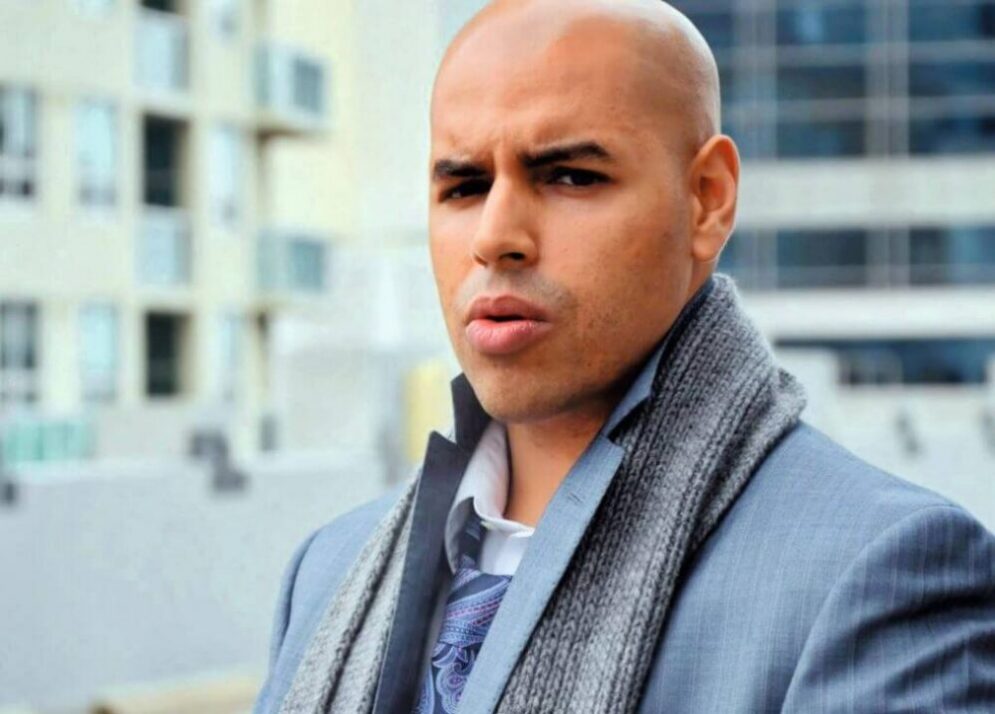
Jonathan Pollard is the founder of Pollard PLLC, a law firm based in Fort Lauderdale, Florida. Pollard routinely litigates high-stakes employment, defamation, and sexual assault cases and has been recognized by Super Lawyers and Chambers & Partners. His work has appeared in or on the New York Times, Bloomberg, the Wall Street Journal, PBS News Hour, Inc. Magazine, Law360, NPR, The Guardian, and more. Pollard is an outspoken critic of corruption and dysfunction in corporate America, large law firms, institutions, the government, and the courts. He frequently writes about these topics on LinkedIn, where he has more than 90,000 followers. His team can be reached at 954-332-2380.